
True Friends Make Life Happier

True Friends Make Life Happier
A true friend is a mirror of oneself. One can see oneself through a friend’s lenses. A loyal friend encourages us towards our personality development and refrains from downgrading it. Friends are among the few important pillars of socialization. Friends or peer groups are forms of primary socialization and play a significant role in shaping an individual. It is an achieved status therefore one should be extremely careful about the selection process.
There is no specific age for being friends with someone. But friendships in childhood are special, filled with kindness and purity. And if one can retain the bond throughout one’s life with the same person, it can be considered equal to a great wealth.
History
Friendship Day was originally proposed by Joyce Clyde Hall, the founder of Hallmark Cards Company which is the largest manufacturer of Greeting Cards in the United States. He suggests Friendship Day to honor and celebrate friendship. Envisaging that it is a day to express appreciation for the friends.
The United Nations General Assembly proclaimed an International Day of Friendship to give it a wider context. UN will observe this day to promote friendship not only at a microscopic level but on a global level. Friendship between Countries, cultures, and governments aimed at enhancing peace and security looks forward to construct a livable world.
It is celebrated on different days across the globe but carries the same universal sentiment altogether.
What is the significance of Friendship Day?
Friends are partners in the ups and downs of our life. They make our living time memorable. They celebrate success with our achievements and provide emotional support during our low times. They are an accompaniment to our lonely lives. They enhance our personality and help us in every phase of life.
| “Friendship is the only cement that will ever hold the world together.” — Woodrow Wilson (28th President of the United States) |
A study by the University of Michigan, found that hanging with other people for at least ten minutes improves one’s ability to solve problems and brainpower. Various other studies show that friendship helps improve sleep and makes people healthier too.
Social Media and Friendship
 The Internet has brought a revolution in people’s interaction. The world has now become a global village, where one can be friend with the other despite their physical distance. Social media like Facebook, Instagram, and other platforms have significantly contributed to bringing people together. Virtual friends are easily accessible. We can make friends from every corner of the world. It has certain benefits like we can learn the language and culture of a very different set of people. It makes us confident in reaching out to people and initiating a conversation.
However, the challenges faced in a virtual friendship should be underlined too. Various threats exist in making an online friendship like limited understanding of the opposite side, misuse of information, fake profiles, lack of emotions, and trust. It can be toxic for teenage boys and girls as their data can be misused. Parents have to keep a keen vigil on their teenager’s social media activities.
How to celebrate friendship day?
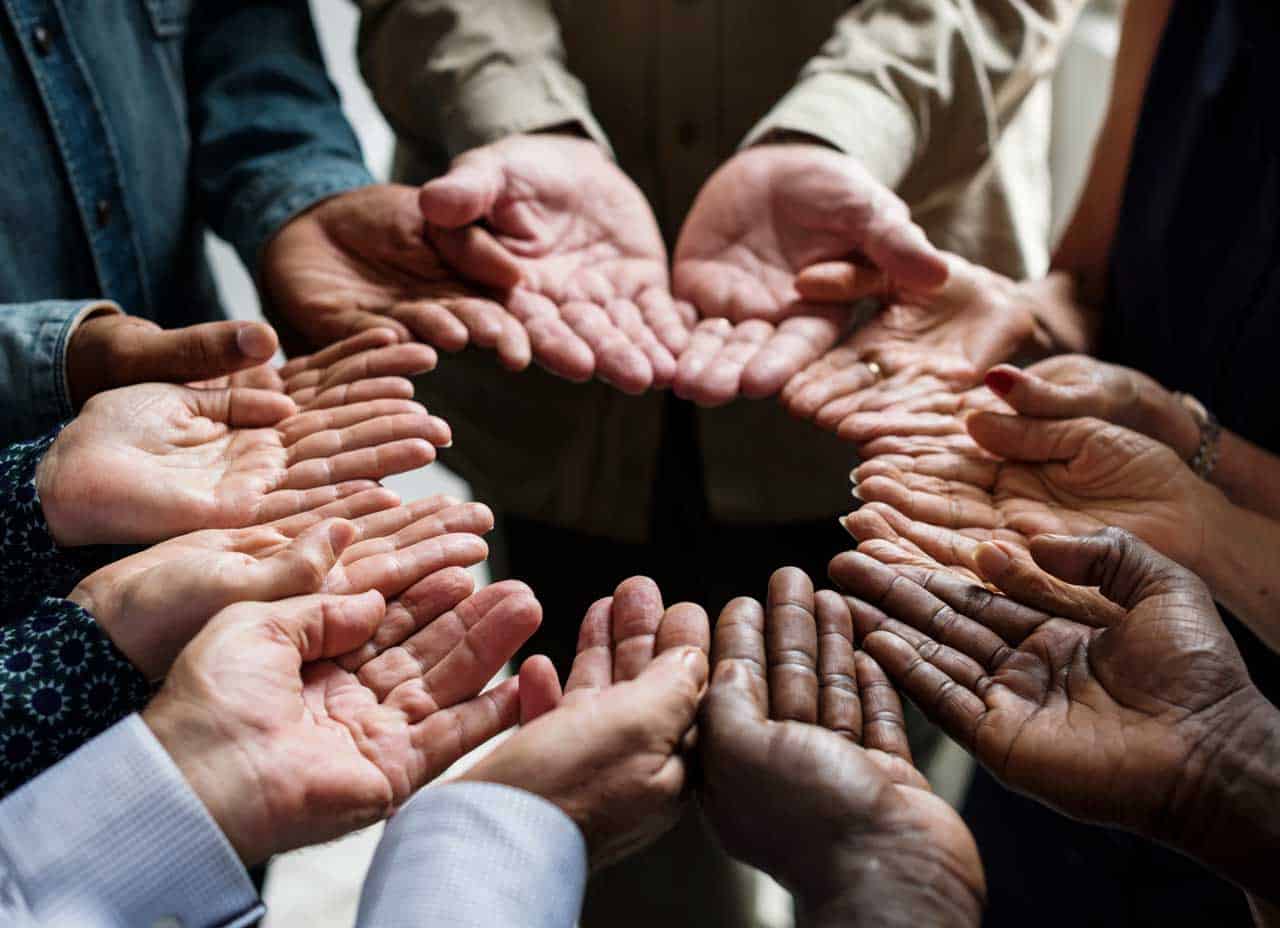 We can express our gratitude to our friends for holding this beautiful relationship strong with time. We can share our thoughts regarding this bond with them through messages or writings. If a quote or a saying can carry the essence of our feeling then we should go with it. If one can express through poetry, commendable job. Poetry is a good genre to express ineffable emotions.
We should reach out to our friends and share memories, express gratitude, and spend time enjoying with friends. The true value of friendship lies in nurturing it from time to time so that the bond becomes stronger.
Peace through Friendship
The world is facing many challenges from reckless war, human rights abuse, and ethnic cleansing to caste and race discrimination. The root cause of many of these problems remains extreme aversion and hatred towards each other. Therefore the United Nations has sought to seek the importance of this day to neutralize the growing aversion between communities on the global level by promoting friendship and cooperation that brings peace in this world. This year’s theme “Embracing Diversity and Fostering Unity” is in sync with the overall objective of enhancing the understanding between various communities.
| “Peace cannot be achieve by Force; it can only by achieved by Understanding. — Albert Einstein |
In reminiscence of the creation of people of various races and communities, the Holy Quran describes that it is done deliberately by Allah (SWT) to know each other.
“O humanity! Indeed, We created you from a male and a female, and made you into peoples and tribes so that you may ˹get to˺ know one another. Surely the most noble of you in the sight of Allah is the most righteous among you. Allah is truly All-Knowing, All-Aware” (Surah Al Hujrat :13)
Islam teaches Moderation (the middle path)
 While choosing friends there should be taken an extreme care. From an Islamic perspective, excessive love and confidence in friends are unacceptable. There is a possibility that the friend may turn into your enemy tomorrow and he will then be in control of all your secrets.
Islam emphasizes treading the middle path. Islamic faith teaches a moderate balanced and equitable approach. There should be a balance of everything in life. Both extremism and asceticism in any affair are discouraged.
| “When you cherish someone you should cherish him moderately for he may be your enemy someday and when you hate someone you should hate him moderately for he may be your friend someday”— Hazrat Ali ibn Abi Talib (R.A.) |
A true Friend is a gem one should not let him loose. According to a saying one is unfortunate if one doesn’t have a friend, but one is more unfortunate than that, if he had one such but he loses it. Friendship is a special bond that needs to be cherished and celebrated. It provides a platform to perform pure act of kindness towards each other. Friendship makes life easy, beautiful and memorable.
Written by: Aijaz Hussain
READ MOREA Watershed Moment in India’s Fight for Freedom
A Watershed Moment in India’s Fight for Freedom

A mass Movement was launched on 8th August 1942, marking it a very crucial in India’s struggle for independence from British colonial rule. This movement is known as quit India movement which was led by Mahatma Gandhi and supported by a many of the freedom fighters. The Quit India Movement, also known as the August Movement or Bharat Chodo Andolan, was a turning point in the freedom struggle of our motherland. It was a significant civil disobedience movement led by Mahatma Gandhi and the Indian National Congress during World War II.
The movement aimed to demand an immediate end to British colonial rule in India and establish a sovereign and independent nation. The slogan “Quit India” encapsulated the demand for the British to leave India. This movement represented a culmination of years of nonviolent resistance and civil disobedience
Chronology
 Seeds of Dissent: By the early 1940s, India had been under British colonial rule for nearly two centuries. The demand for self-rule and independence had grown significantly and various factors contributed to the rising tide of dissent. The oppressive policies of the British Raj, coupled with the economic exploitation of India’s resources, had deeply resonated with the masses. Additionally, the effects of World War II further catalyzed and fueled the agitation for complete autonomy.
 Call to Action: As the torchbearer of nonviolent resistance, Mahatma Gandhi realized that the time had come for a decisive action that would shake the foundations of British rule in India. In his call for the Quit India Movement, he emphasized the need for immediate withdrawal of British forces and the establishment of a truly democratic government. He gave the slogan of “Do or die” during this movement.
 Mass Mobilization at Peak: The Quit India Movement witnessed widespread participation from people across various regions, religions, backgrounds, caste and gender also. Millions of Indians joined the call of “Quit India movement” which leads to strikes, demonstrations and acts of civil disobedience that paralyzed normal life in many parts of the country.
Repression: The British responded to the Quit India Movement with brutality, they used tactics such as mass arrests, police violence and repression of civil liberties. However, these measures only fueled the determination of the Indian populace to achieve their goal of freedom.
Impact: The Quit India Movement marked a turning point in India’s fight for independence, as it demonstrated the unity, resilience and determination of the Indian people in the face of adversity.
While immediate success in achieving complete independence was not achieved by this movement. It set the stage for future negotiations and discussions that ultimately paved the way for India’s freedom in 1947.
Remembering the Spirit of Quit India
 As we commemorate the Quit India Movement on its anniversary, it is important for us as Indian citizen to understand the sacrifices made by our leaders and their unwavering commitment to a free and just society. This movement serves as a reminder to us that the path to freedom is full of challenges but determination is the only weapon through which we can achieve anything. The lessons of the Quit India Movement continue to resonate in today’s world, where struggles for justice, equality and human rights persist. Let us pledge on this day as Indian citizen to uphold the principles of democracy, unity, justice always.
India history of independence has a long journey with lots of ups and downs. There are some crucial events which has completely changed our destiny as Indian. It was started with the Indian Revolt of 1857 and then finally ends with India’s independence in 1947.

Here is a quick glance:
- Indian Rebellion of 1857 (Sepoy Mutiny or First War of Independence)
- Formation of Indian National Congress (1885)
- Partition of Bengal (1905) and Swadeshi Movement
- Home Rule Movement (1916-1918)
- Jallianwala Bagh Massacre (1919)
- Non-Cooperation Movement (1920-1922)
- Civil Disobedience Movement (1930-1934)
- Quit India Movement (1942)
- Royal Indian Navy Mutiny (1946)
- Indian Independence (1947)
Written by: Mohd. Talib Khan
READ MOREGlobal Family Day

Global Family Day is an annual event celebrated on the first Sunday of January. It is a day to commemorate the importance of family and to recognize the bonds that unite us all. The day is intended to bring people together from all walks of life, regardless of race, religion, or nationality, to celebrate the significance of family and to recognize the importance of family in our lives.
On this day we recognize the importance of family for providing us with emotional, physical, and financial support in times of dire need. Global Family Day is an opportunity for people all around the world to acknowledge the unique and valuable contributions that families make to society.
Value of family for society: the importance of family for society is immense. Families provide a sense of stability and security, and they are the foundation of our communities and civilization.
They are the source of our values and beliefs. Families also provide a sense of belonging and identity, and they are the root of our culture and traditions. Families are indispensable for the development of healthy, productive, and successful individuals, and they are the cornerstone of our society.
Global Family Day – Significance: While it aims to promote the concept of harmony and unity, it also emphasizes the idea of a ’global village where everyone is the same, regardless of their color, background, or place of origin. when we dig a little deeper to understand the origin of Global Family Day, we came to know that it was given by the United Nations General Assembly in 1997 to mark Millennium celebration.
“There is no doubt that it is around the family and the home that all the greatest virtues… are created, strengthened and maintained.” –Winston Churchill
 Family and mental health: Family and mental health are closely related. Mental health can be affected by family dynamics, such as communication, conflict resolution, and support. Family members can also provide emotional support and can help to manage stress, which has a positive impact on mental health. Family members can help to cope with depression by providing emotional support, listening without judgment, and helping to create a safe and supportive environment. Additionally, they help to identify signs of depression and provide resources for treatment. They provide support to make realistic goals, engage in activities that bring joy, and seek professional help when needed.
Lastly here are suggestions, what we can do on this day: The best way to observe Global Family Day is to spend the day with our families. On this day just plan random dinner together with friends and relatives especially with whom we have bitter relations and enjoy other family activities that stringent their bonds and promote peace in the family. you can try to camp together or cook together going for picnics, treks and many more.